

Facts & figures
Economic analyst
English
Program
The program develops a deep understanding of how economies work in their wider social context. It combines rigorous economic theory with quantitative methods and empirical evidence, while equipping students with the analytical skills needed to understand and address complex economic challenges.
The Master’s Program in Economic Analysis is designed for students who want to develop a rigorous understanding of economic processes and the forces that shape them. It brings together economic theory, quantitative methods, and empirical analysis with a broader social-science perspective, allowing students to examine economic questions not only through models and data, but also in their institutional, political, and societal context.
The program’s central aim is to equip students with the intellectual and analytical tools needed to formulate meaningful economic questions, assess evidence critically, and develop well-grounded explanations and solutions. Students deepen their knowledge of microeconomics, macroeconomics, econometrics, data analysis, and economic modelling, while learning how to apply these tools to real-world economic and social challenges.
To whom?
The program is particularly well suited to graduates of economics and related social-science disciplines, as well as students with backgrounds in mathematics, statistics, finance, or other fields who are interested in applying analytical approaches to economic questions. It offers an environment in which students can strengthen both their technical expertise and their ability to think critically about how economies function and how economic decisions affect societies.
Location
Studying in Budapest adds a distinctive Central European dimension to this experience. Located at the intersection of diverse economic and institutional traditions, the region provides a particularly interesting context in which to explore economic transformation, European integration, inequality, development, and the relationship between markets, institutions, and society.
A defining strength of the program is the balance it establishes between analytical rigor and broader social understanding. Students learn to work confidently with economic theory and data, while also developing the judgement required to interpret evidence and understand its wider implications. The program therefore provides a strong foundation for those who wish to work with complex economic issues in professional settings, as well as for students considering further academic research.
Structure
Career
Graduates can find opportunities in economic and policy analysis, consulting, banking and finance, business and market research, public administration, central banks, regulatory institutions, international organizations, and research institutes.
economic analyst
policy analyst
economist
consultant
data or quantitative analyst
researcher
market analyst, and
forecasting specialist.
For students interested in an academic or research career, the program can also provide a strong foundation for doctoral studies.
Admissions
| EU/EEA students | Non-EU/EEA students | |
|---|---|---|
| Tuition fee/semester | 1300 EUR | 3500 EUR |
| Application fee |
EUR 100 (non-refundable) between 01/10/2026-15/11/2026
EUR 100 (non-refundable) between 20/11/2026-15/01/2027
EUR 150 (non-refundable) between 20/01/2027-30/04/2027
EUR 200 (non-refundable) between 05/05/2027-31/05/2027
|
EUR 100 (non-refundable) between 01/10/2026-15/11/2026
EUR 100 (non-refundable) between 20/11/2026-15/01/2027
EUR 150 (non-refundable) between 20/01/2027-30/04/2027
EUR 200 (non-refundable) between 05/05/2027-31/05/2027
|
| Entrance exam fee | - | - |
| Other cost | - | - |
Entry requirements
Undergraduate / Bachelor diploma (or higher)
Full credit acknowledgement: Economics, Applied Economics, Economic and Financial Mathematical Analysis.
Partial credit acknowledgement: Human Resource Management, Business Administration and Management, Commerce and Marketing, International Business, Finance and Accounting, Tourism and Catering, and Business Informatics.
In case of other bachelor's degrees: individual consideration.
If the BA degree does not meet all the necessary requirements, the applicant may be required to complete additional credits in the relevant fields during their first year of study to fulfil these requirements upon acceptance.
Language requirements
Certification of English knowledge (both written and oral): B2
IELTS Score: 5.5
TOEFL iBT Band: 46-59
Cambridge English Scale Score: 162.
If the applicant does not have any of the above certifications, their English proficiency will be assessed during the admission interview. Any letter of acceptance issued by the Faculty of Social Sciences is based on the verified fact that the applicant’s command of English has been assessed; therefore, they are considered eligible to pursue their studies at the institution.
If the applicant can prove that they completed their former education entirely in English by submitting a notarized attestation and a detailed academic transcript, no proof of language knowledge will be required throughout the admission process.
| Document | Comment |
| Application form | - |
| Bachelor-level degree | - |
| Transcript of records | - |
| Motivation letter | The general guidelines and expectations for the letter are: the applicants introducing themselves, their motivation, interests and goals with the programme. The length of the motivation letter is between 1500 and 4000 characters. |
Letter of recommendation | 2 pieces |
| Copy of the main pages of the passport | needs to be valid |
| Copy of application fee transfer | - |
| Language certificate | If the applicant has one |
The application starts on the online application system. Students need to register in the system, fill in the online application form, upload the required documents and follow the instructions during the application process.
Students who (also) hold Hungarian citizenship must apply through felvi.hu Please note that if an application is submitted not according to the aforementioned, it will be rejected.
Procedure of the entrance examination
The application deadline refers to the final submission of the complete application package through the online system.
For the September intake, there are four application periods:
- Early Bird 1 Period: 2026 October 1 – 2026 November 15 (23:59 CET)
- Early Bird 2 Period: 2026 November 20 – 2027 January 15 (23:59 CET)
- Regular Period: 2027 January 20 – 2027 April 30 (23:59 CEST)
- Last Call Period: 2027 May 5 – 2027 May 31 (23:59 CEST)
These distinct periods allow applicants the flexibility to submit their applications at their convenience. All applicants within each period have an equal chance of gaining admission to the programme.
Entrance examination and selection process
The applications are examined by the Admission Board and applicants are notified of the outcome of the selection in the online application system until [WHEN]. Admission letters are sent out in the online application system. In case of February intake, admission letters are sent out in the online application system
After each application deadline, the Admission Board reviews the applications. After the admission interview, applicants are informed of the selection outcome through the online application system within approximately one month after the admission interview.
If the offer is accepted, admission letters are sent out through the online application system as soon as possible, as specified in the offer decision.
Based on the results, certain students may be placed on a waiting list. Final results are expected by the first half of August.
Type of entrance examination: Oral
Place of entrance examination: Online
Further details of selection and evaluation
As the program expects students with diverse backgrounds, the goal of an entrance exam is not to test what students know, but to see if they are motivated in the first place; if they have a good grasp of basic concepts and tools of economics; and if they possess the analytical skills necessary to join the program.
To prepare for the entrance exam, applicants are encouraged to consult one of the following introductory textbooks. We do not expect students to know the material by heart; rather, we expect them to have a good grasp of the most important concepts, principles, and results.
Recommended reading:
- Mankiw, N. G. (2024). Principles of economics (10th ed.). Cengage. Previous editions are equally suitable and are also used in our bachelor's programme.
Additional readings
- Frank, R. H., & Bernanke, B. S. (2024). Principles of economics. McGraw Hill.
- Hubbard, R. G., & O'Brien, A. P. (2024). Economics (9th ed.). Pearson.
- Krugman, P., & Wells, R. (2024). Economics (7th ed.). Worth Publishers.
Further details of selection and evaluation:
Applicants with a full application package will be asked to participate in an oral entrance exam. The institutional admission scores are based on a total evaluation of academic excellence (based on the submitted documents) and the results of the entrance exam. The entrance exam seeks to assess the general and professional knowledge and interest of the applicant.
A successful oral entrance exam is the prerequisite of getting admitted. If the applicant fails the oral entrance exam, the application will be rejected.
Contacts
Eszter PISTA
Department Administrator
E-mail: econ@tatk.elte.hu
Dr András SZÉKELY-DOBY
Associate Professor

Students develop key skills including critical and strategic thinking, intercultural awareness, diplomacy, negotiation, and respectful debate. At the master’s level, students can specialize in Human Rights, Security Studies, or European Development and Foreign Policy, while doctoral students pursue independent research in their chosen fields.
Graduates go on to careers in government, NGOs, international organizations, and EU institutions, or continue their academic studies. Studying in Budapest, a vibrant and international city, students become part of a diverse, supportive academic community at one of Central and Eastern Europe’s leading universities.
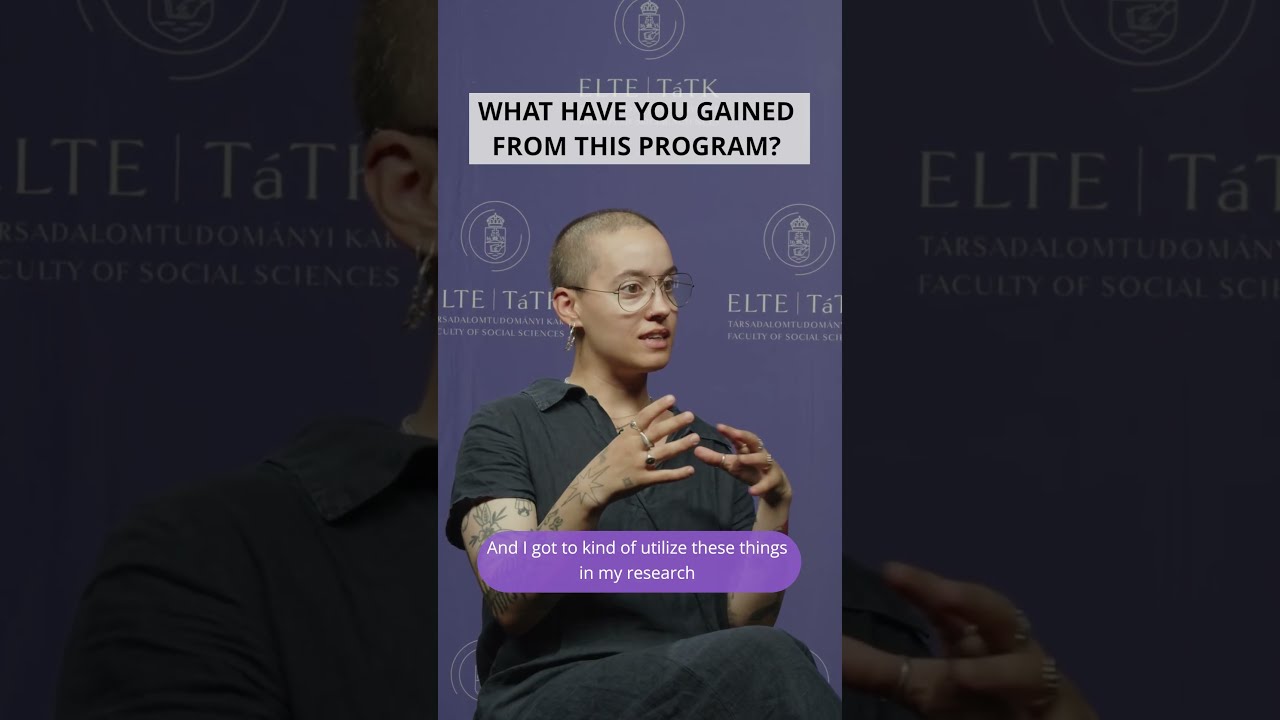
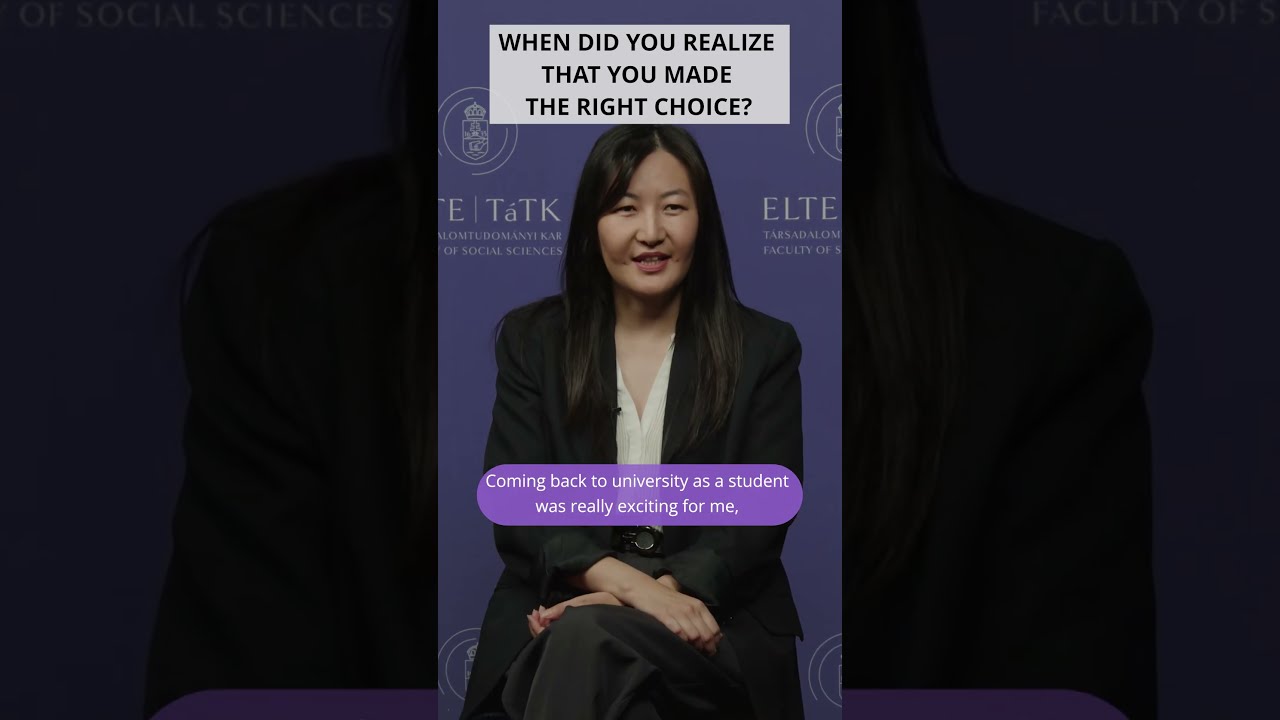
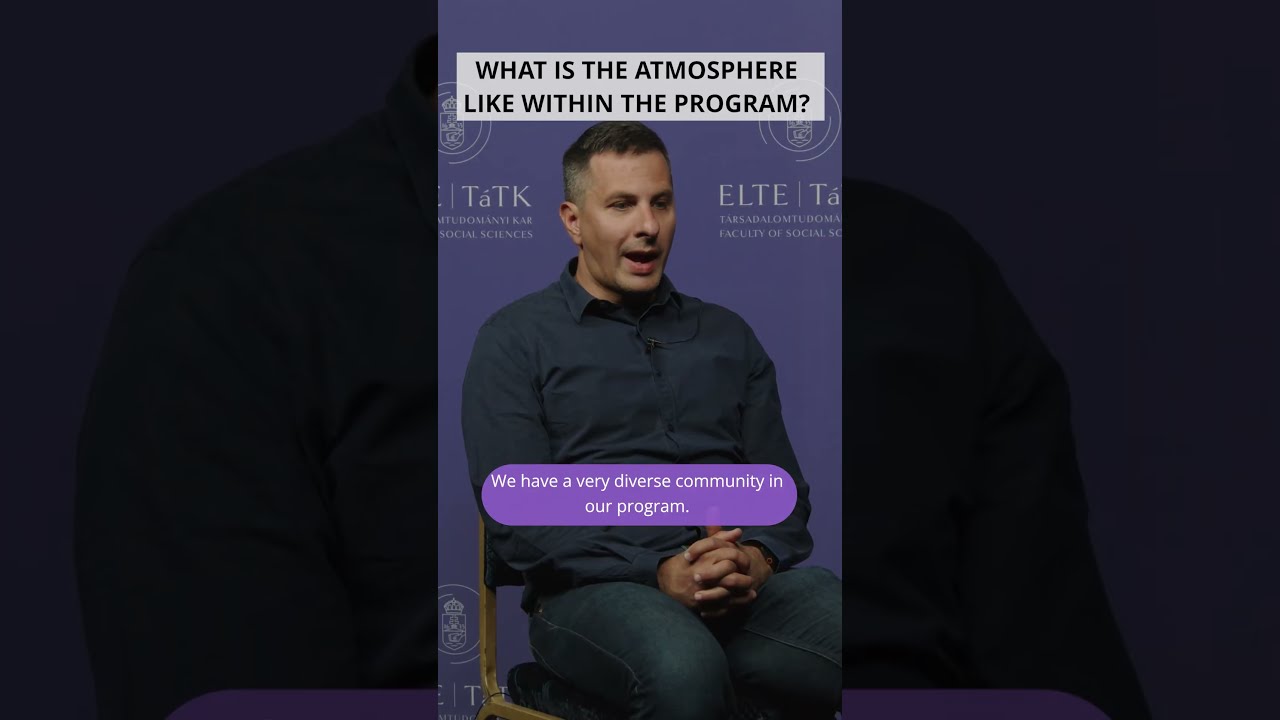





Besides training in methodology, students acquire a solid knowledge of the concepts, principles, and theories of economics, and are introduced to other social sciences and business studies, as well. The general character of the program is that it offers graduates high flexibility in their future career decisions. The program enables students to further their studies in several directions at the master’s level, including economics, business, sociology, and international relations, or to apply their broad-based knowledge in the areas of government, business, politics, or media.





Students develop key skills including critical and strategic thinking, intercultural awareness, diplomacy, negotiation, and respectful debate. At the master’s level, students can specialize in Human Rights, Security Studies, or European Development and Foreign Policy, while doctoral students pursue independent research in their chosen fields.
Graduates go on to careers in government, NGOs, international organizations, and EU institutions, or continue their academic studies. Studying in Budapest, a vibrant and international city, students become part of a diverse, supportive academic community at one of Central and Eastern Europe’s leading universities.
Besides training in methodology, students acquire a solid knowledge of the concepts, principles, and theories of economics, and are introduced to other social sciences and business studies, as well. The general character of the program is that it offers graduates high flexibility in their future career decisions. The program enables students to further their studies in several directions at the master’s level, including economics, business, sociology, and international relations, or to apply their broad-based knowledge in the areas of government, business, politics, or media.
Find the structure of the programme on this link.