

Facts & figures
Social policy expert
English
Program
Understand how societies work—Learn how to make them work better
Tackle the big issues of our time—inequality, ageing, migration, labour‑market transformation, and access to welfare—with a master’s that turns evidence into better policy. At ELTE, Social Policy is a dynamic, problem‑oriented field at the crossroads of sociology, economics, political science, law, and social work. You’ll learn to read complex social realities—and turn insights into practical, values‑driven solutions.
The Social Policy MA programme equips you with the knowledge and skills to analyse these challenges and to create impact: design effective, evidence-based responses.
What you will learn
We connect evidence, policy, and practice across national and institutional contexts. While we build on the European social model, we consistently place it in a broader global frame so you can compare systems, understand diverse welfare regimes, and engage confidently in international debates.
The programme allows you to tailor your studies to your interests through a wide range of elective courses, including: health policy, labour market policy, education, housing, social protection, ageing, disability, and child well-being.
You will:
Analyse complex social data and make sense of competing explanations.
Design and evaluate policies that improve people’s lives.
Understand institutional and political constraints—and work effectively within them.
Translate research into actionable recommendations for decision‑makers.
Why ELTE Social Policy
Strong interdisciplinary foundation
Policy-oriented, practice-relevant training
International perspective with European expertise
Flexible curriculum tailored to your interests
Focus on values: equality, solidarity, and human dignity
The programme has been running successfully in the Hungarian language for over thirty years and has always been among the most popular at the Faculty of Social Sciences. Its founder was Zsuzsa Ferge, Professor Emerita and a full Member of the Hungarian Academy of Sciences, as well as former President of the Social Professionals’ Association.
The programme’s popularity is due to the curriculum’s continuous development, including the incorporation of student feedback into the education. In our view, the ideal social policy expert has multidisciplinary knowledge and skills. He/she should be familiar with many policy fields in and outside social policy itself; he/she should understand human nature and behaviour as well as the rules and constraints of the surrounding economic and political environment. Practising the profession requires thematic and analytical knowledge as well as presentation skills. Social policy analysis and planning are value-driven activities centred on a commitment to the values of equality and solidarity between people and unconditional respect for human dignity.
Structure
Career
Graduates are prepared for careers where social understanding meets decision-making. Typical career paths include:
policy analyst or advisor in government and international organisations
expert roles in NGOs and development agencies
researcher in think tanks and academic institutions
programme or project manager in social and public sectors
roles in international organisations and transnational policy environments
The programme also provides a strong foundation for doctoral studies.
- Research fellow in public and private social research institutes
- Manager / head of department in regional / municipal office for social welfare
- Head of various social care institutions
- Project manager in social development agencies
- Policy advisor for MPs, MEPs
Admissions
| EU/EEA students | Non-EU/EEA students | |
|---|---|---|
| Tuition fee/semester | 1550 EUR | 3500 EUR |
| Application fee |
EUR 100 (non-refundable) between 01/10/2026-15/11/2026
EUR 100 (non-refundable) between 20/11/2026-15/01/2027
EUR 150 (non-refundable) between 20/01/2027-30/04/2027
EUR 200 (non-refundable) between 05/05/2027-31/05/2027
|
EUR 100 (non-refundable) between 01/10/2026-15/11/2026
EUR 100 (non-refundable) between 20/11/2026-15/01/2027
EUR 150 (non-refundable) between 20/01/2027-30/04/2027
EUR 200 (non-refundable) between 05/05/2027-31/05/2027
|
| Entrance exam fee | ||
| Other cost |
Entry requirements:
BA or higher in: Social Work and Social Pedagogy.
In the case of other bachelor’s degrees: individual consideration.
If the BA degree does not meet all the necessary requirements, the applicant may be required to complete additional credits in the relevant fields during their first year of study to fulfil these requirements upon acceptance.
Language requirements:
Certification of English knowledge (both written and oral): B2
IELTS Score: 5.5
TOEFL iBT Band: 46-59
Cambridge English Scale Score: 162
If the applicant is unable to prove their knowledge of English with any of the above certifications, their English knowledge will be assessed during the admission interview. Any letter of acceptance issued by the Faculty of Social Sciences is based on the verified fact that the applicant’s command of English has been assessed; therefore, they are considered eligible to pursue their studies at the institution.
If the applicant can prove that they completed their former education entirely in English by submitting a notarized attestation and a detailed academic transcript, no proof of language knowledge will be required throughout the admission process.
| Document | Comment |
| Online application form | |
| Bachelor-level degree | |
| Transcript of records | |
| Motivation letter | The general guidelines and expectations for the letter are: the applicants introducing themselves, their motivation, interests and goals with the programme. The length of the motivation letter is between 1500 and 4000 characters |
| Copy of the main pages of the passport | needs to be valid |
| Copy of application fee transfer | |
| Language certificate | if the applicant has one |
The application starts in the online application system. Students need to register in the system, fill in the online application form, upload the required documents and follow the instructions during the application process.
Students who hold Hungarian citizenship and/or dual citizenship, must apply through felvi.hu Please note that if an application is submitted not according to the aforementioned, it will be rejected.
Entrance examination and selection process:
The application deadline refers to the final submission of the complete application package through the online system.
For the September intake, there are four application periods:
- Early Bird 1 Period: 2026 October 1 – 2026 November 15 (23:59 CET)
- Early Bird 2 Period: 2026 November 20 – 2027 January 15 (23:59 CET)
- Regular Period: 2027 January 20 – 2027 April 30 (23:59 CEST)
- Last Call Period: 2027 May 5 – 2027 May 31 (23:59 CEST)
These distinct periods allow applicants the flexibility to submit their applications at their convenience. All applicants within each period have an equal chance of gaining admission to the programme.
After each application deadline, the Admission Board reviews the applications. After the admission interview, applicants are informed of the selection outcome through the online application system within approximately one month after the admission interview. If the offer is accepted, admission letters are sent out through the online application system as soon as possible, as specified in the offer decision.
Applicants with a full application package will be notified after the application deadline about the exact time and date of application interviews conducted via Ms Teams. Applicants are responsible for having technically suitable conditions for the interview from their side
Applicants are expected to be prepared taking questions regarding the compulsory admission materials (see: Recommended readings for the entrance exam) from the side of admission committee composed of a professor, a lecturer and a student representative.
Based on the results, certain students may be placed on a waiting list. Final results are expected by the first half of August.
Type of entrance examination: Oral
Place of entrance examination: Online
Further details of the entrance exam:
Oral exam:
During the exam, applicants will have a discussion on one of the topics listed below. The topics are based on Bent Greve (ed.): Routledge Handbook of the Welfare State. Second Edition, Taylor & Francis 2019, p. 5-80
Public welfare
Welfare State
Fiscal welfare and occupational welfare
Poverty
Benefits in kind and in cash
Further details of selection and evaluation:
Applicants with a full application package will be asked to participate in an oral entrance exam. The institutional admission scores are based on a total evaluation of academic excellence (based on the submitted documents) and the results of the entrance exam. The entrance exam seeks to assess the general and professional knowledge and interest of the applicant.
A successful oral entrance exam is the prerequisite of getting admitted. If the applicant fails the oral entrance exam, the application will be rejected.
Contacts
Ms Ágnes GERTHEIS
Departmental Coordinator
E-mail: gertheis.agnes@tatk.elte.hu
TEL: 0036 1 372-2500/ 6630(ext)
International Office, Faculty of Social Sciences
E-mail: international@tatk.elte.hu
Postal address:, Pázmány Péter sétány 1/A, Budapest, H-1117
More information
Faculty Website
Facebook page of the Faculty of Social Sciences
Nóra MENICH
Assistant Professor

Students develop key skills including critical and strategic thinking, intercultural awareness, diplomacy, negotiation, and respectful debate. At the master’s level, students can specialize in Human Rights, Security Studies, or European Development and Foreign Policy, while doctoral students pursue independent research in their chosen fields.
Graduates go on to careers in government, NGOs, international organizations, and EU institutions, or continue their academic studies. Studying in Budapest, a vibrant and international city, students become part of a diverse, supportive academic community at one of Central and Eastern Europe’s leading universities.





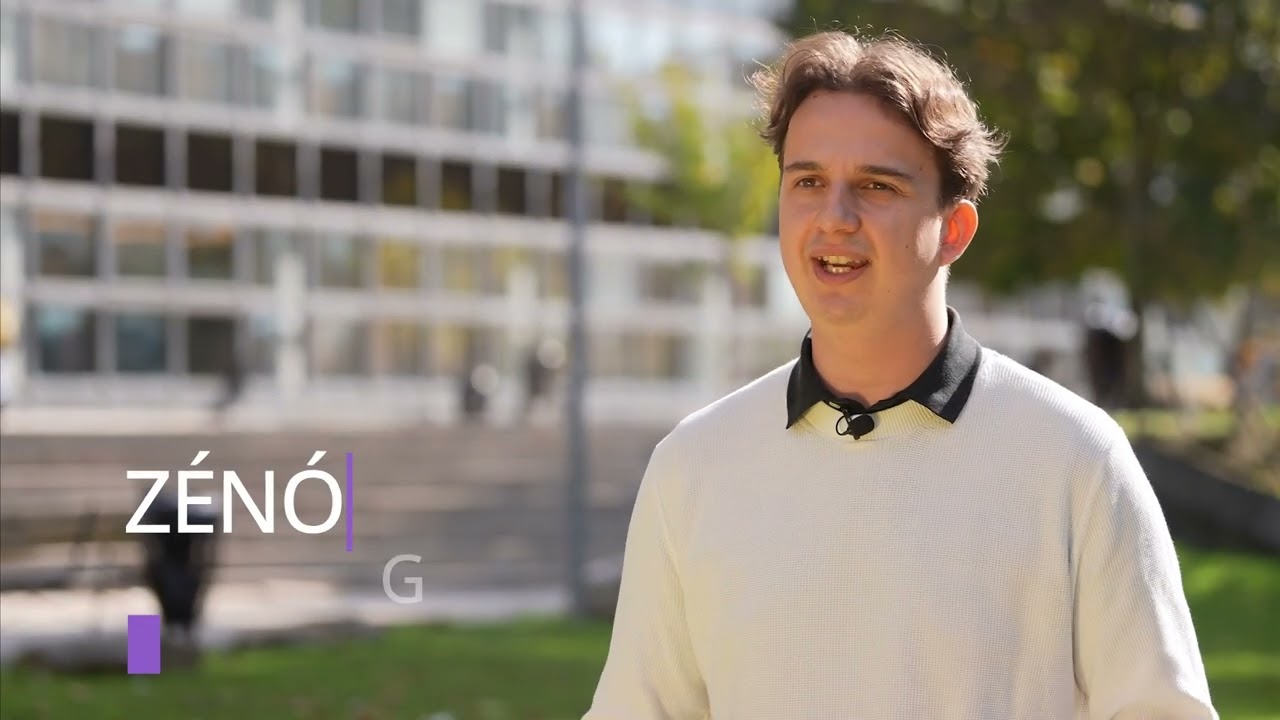
Besides training in methodology, students acquire a solid knowledge of the concepts, principles, and theories of economics, and are introduced to other social sciences and business studies, as well. The general character of the program is that it offers graduates high flexibility in their future career decisions. The program enables students to further their studies in several directions at the master’s level, including economics, business, sociology, and international relations, or to apply their broad-based knowledge in the areas of government, business, politics, or media.


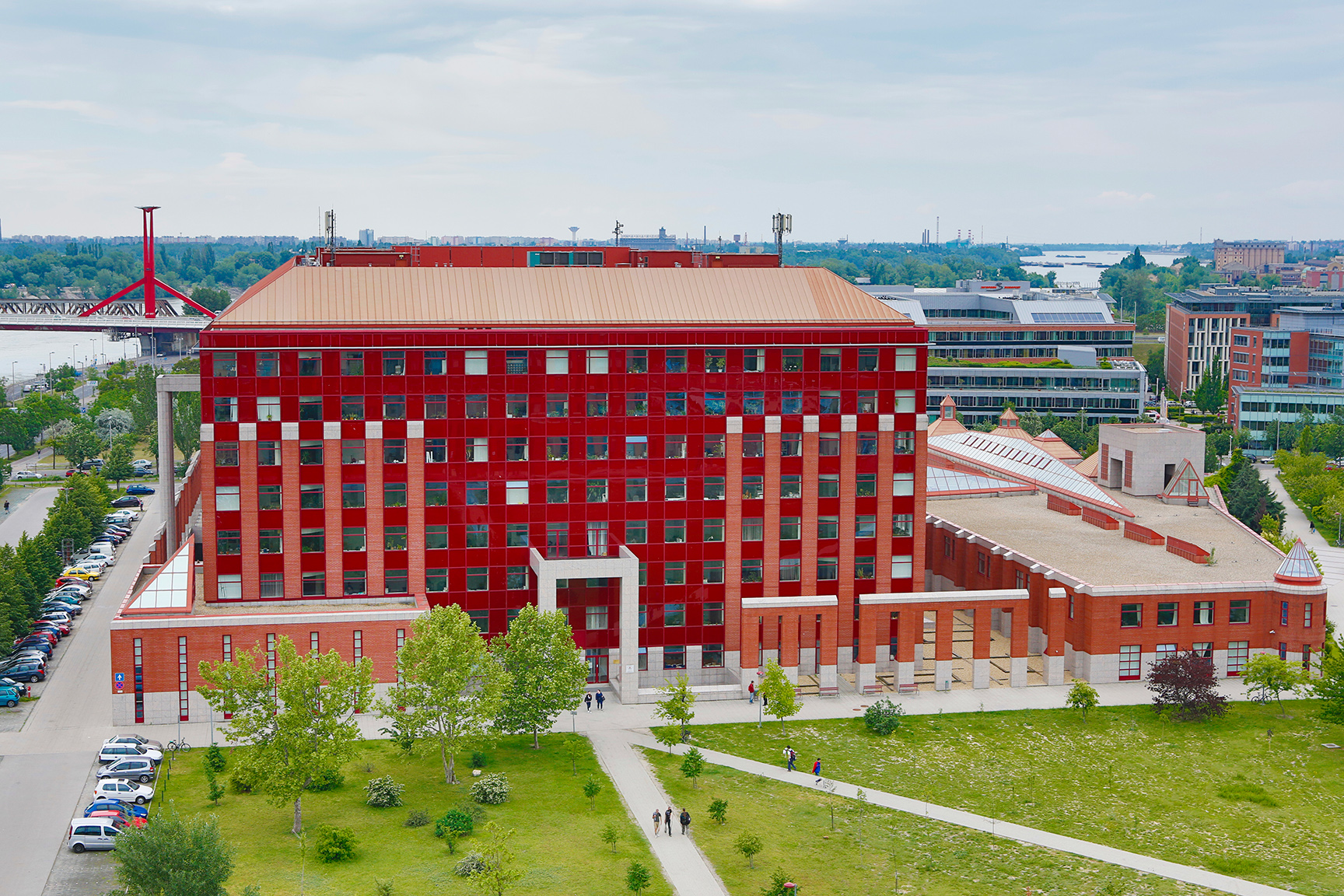


Students develop key skills including critical and strategic thinking, intercultural awareness, diplomacy, negotiation, and respectful debate. At the master’s level, students can specialize in Human Rights, Security Studies, or European Development and Foreign Policy, while doctoral students pursue independent research in their chosen fields.
Graduates go on to careers in government, NGOs, international organizations, and EU institutions, or continue their academic studies. Studying in Budapest, a vibrant and international city, students become part of a diverse, supportive academic community at one of Central and Eastern Europe’s leading universities.
Besides training in methodology, students acquire a solid knowledge of the concepts, principles, and theories of economics, and are introduced to other social sciences and business studies, as well. The general character of the program is that it offers graduates high flexibility in their future career decisions. The program enables students to further their studies in several directions at the master’s level, including economics, business, sociology, and international relations, or to apply their broad-based knowledge in the areas of government, business, politics, or media.
Structure is available on this link: https://tatk.elte.hu/en/studies/socialpolicyma/str