


A new research based on archaeogenomic and isotopic studies as well as archaeological finds paints a more nuanced picture of how early medieval communities were organized in the Little Hungarian Plain during the Lombard era, and demonstrates how their relationships could have provided the foundation for emerging new political systems. The results of the international research led by István Koncz (ELTE Faculty of Humanities) and Yijie Tian (Stony Brook University, NY) were published in the Science journal.
The collapse of the Roman Empire and the rise of the “Barbarians” – essentially various groups from other areas of Europe and Asia who took over much of Europe as the Roman Empire disintegrated formed on its territory between the 4th and 6th centuries CE marked one of the most significant turning points in European history. Although the political, demographic, and cultural changes taking place in Western Europe have long been fundamental questions in the study of this period, surprisingly little is known about how these changes affected communities living on the former empire’s frontiers.
Historical sources from the era rarely provide insights into the lives of simple rural communities, and in public thinking, this era often appears simply as the period of “barbarian migrations,” when groups took control of the former provinces of the empire. The international research group, which unites several scientific disciplines, led by István Koncz (ELTE Institute of Archaeological Sciences) and Yijie Tian (Stony Brook University), generated a combined ancient DNA and archaeological dataset using more than 300 individuals from archaeological periods, as well as isotope studies relating to mobility (strontium) and diet (carbon and nitrogen), to gain a more accurate picture of the lives of individuals of the time and the social processes forming their communities.
During the research, complete bioarchaeological analyses were carried out at two Roman-period (3rd–5th centuries AD) and five Lombard-period (6th century AD) cemeteries in the Little Hungarian Plain. By combining ancient DNA data and archaeological information on burial customs, researchers reconstructed the social conditions of the Little Hungarian Plain—one of the important areas of the former Roman province of Pannonia—after the end of Roman rule.
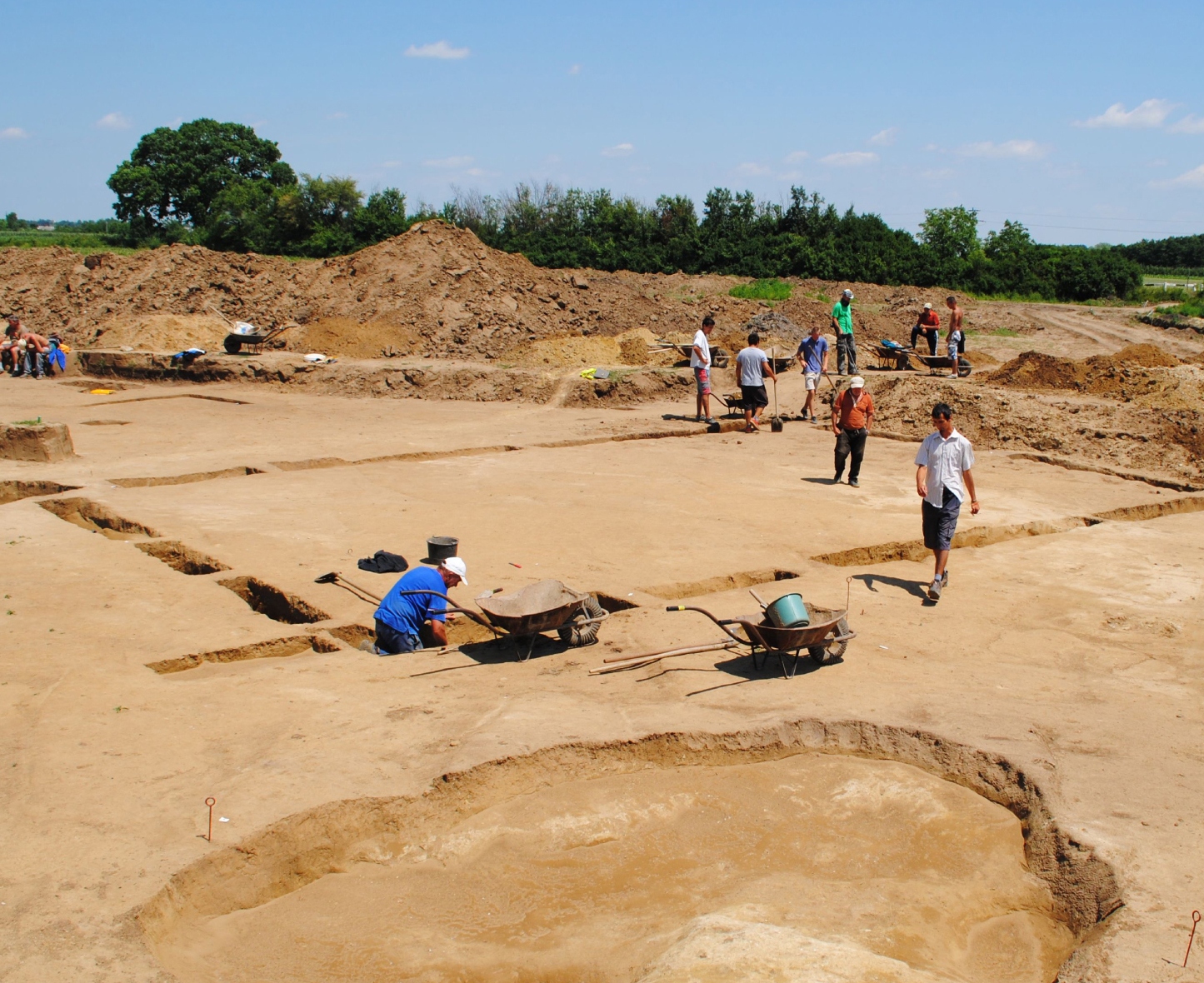
Excavation of the 6th-century cemetery at Szeleste in 2013 (Photo source: Savaria Museum, Szombathely)
According to the results, mainly Southern European genetic heritage can be seen in the genetic composition of the Roman-period population, but Asian and African genetic elements were also significant. This well reflects the diverse, cosmopolitan nature of the Roman Empire, where people from various geographic and cultural backgrounds lived and moved together.
After the end of Roman rule, however, the proportion of northern European genetic components in the region increased significantly, the simplest and most probable explanation for which—based on historical sources—may be the migrations characteristic of the era. The newly arriving population is likely connected to the migration of the Lombards known from historical sources. These northern Germanic people first appeared in the 1st–2nd centuries CE in what is now northern Germany, but by the end of the 5th century, they were found along the Middle Danube, and extended their power to the present-day Little Hungarian Plain, before—according to contemporary accounts—departing for Italy in 568, where their kingdom lasted up to the 8th century.
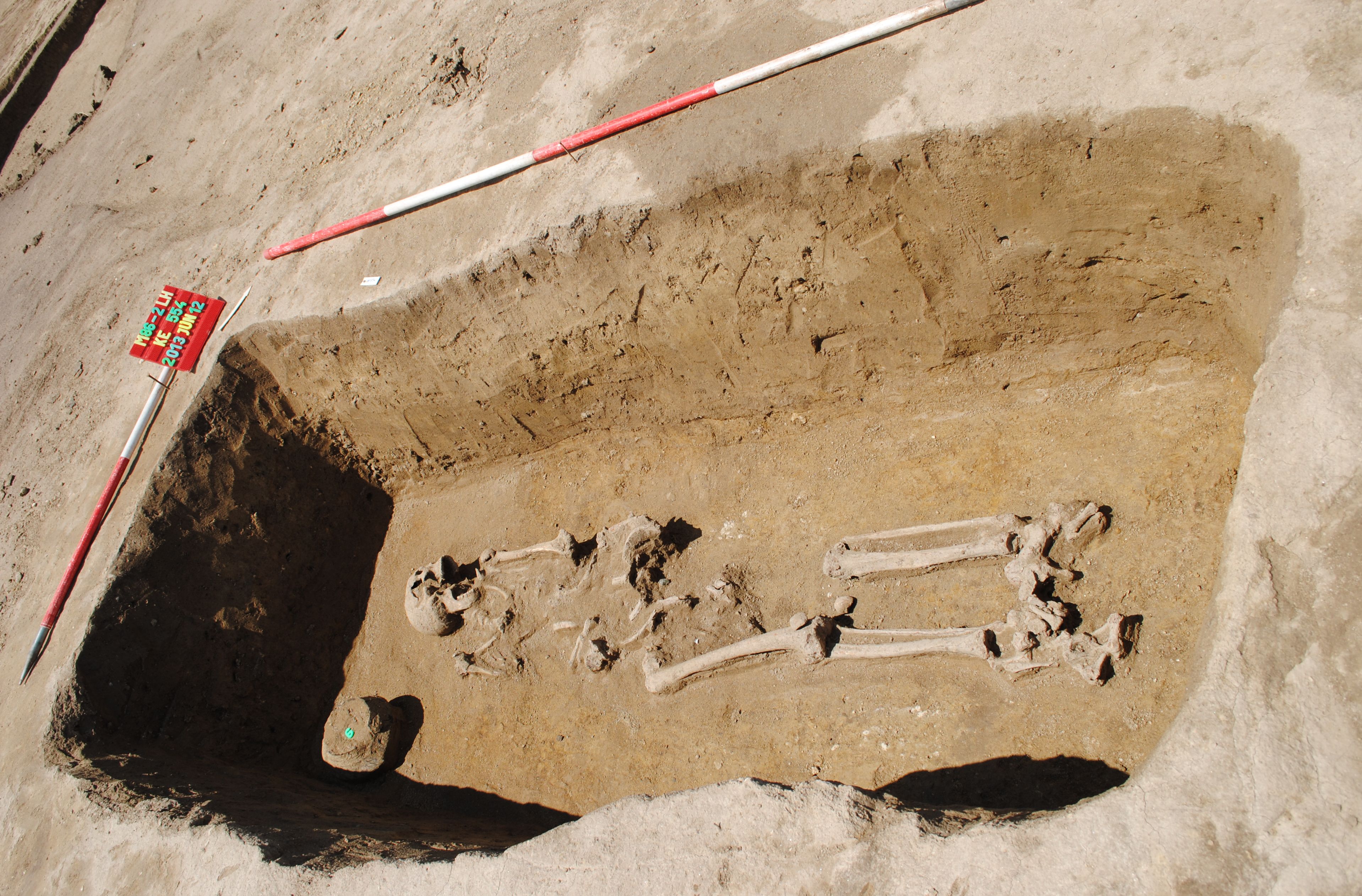
Burial of an adult male from the Szeleste cemetery (Photo source: Savaria Museum, Szombathely)
The studies also showed that there was not just a single wave of migration. Instead, complex and long-lasting mobility processes emerged, in which the inhabitants of the Little Hungarian Plain were continuously in contact with communities living further north. The newly arriving groups did not simply establish rural settlements, but created a diverse and hierarchical new society, in which elite groups—buried with rich grave goods, made of precious metals, imported from Western Europe and the Mediterranean—played a decisive role in organizing a new political order after the Roman era.
“The results of archaeogenomic studies fundamentally changed our view of the communities of the era. Previously, we thought these cemeteries generally belonged to similar, rural, family-based communities,” said István Koncz. “However, the results show a much more complex picture. While we found similar genetic diversity in several cemeteries, the social structure of individual communities differed significantly. Some communities were indeed formed around extended kinship networks and elite families, while in other cemeteries we found no relatives at all, suggesting that they were organized on completely different grounds.”
Researchers highlight the cemetery at Hegykő, where the population with northern European genetic traits formed large, closely related kin groups. The richer grave goods—such as weapons and precious-metal fibulas—indicate that these people had higher social status. By contrast, at nearby Szeleste, they did not observe similarly extensive kinship connections. There, ancestors with both northern and southern genetic backgrounds mixed in families, suggesting a different kind of coexistence among communities from varied backgrounds.
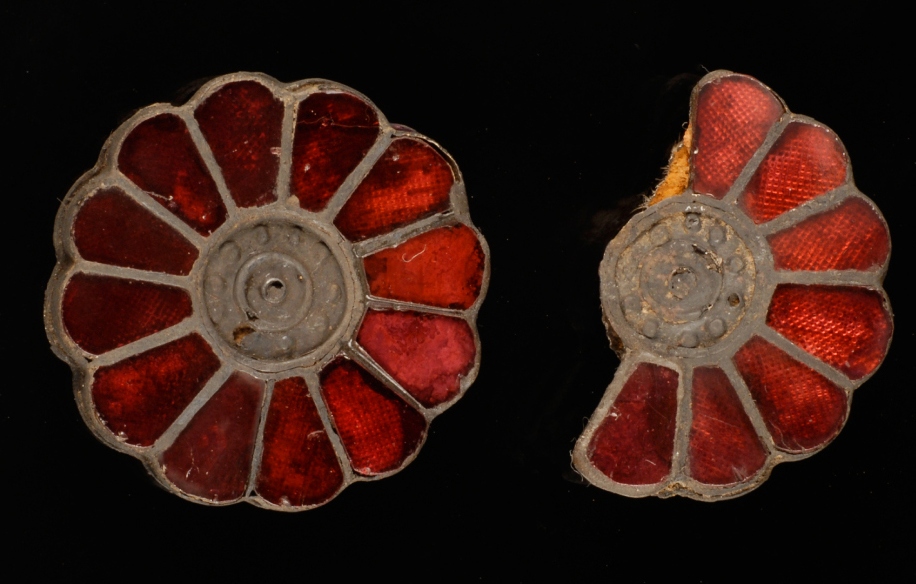
Gem-studded disc fibula pairs from the Szeleste cemetery (Photo source: Savaria Museum, Szombathely)
Although genetic and archaeological data clearly support the appearance of a new population in the region, the results also showed that the newly formed communities were not homogeneous units in biological terms, and the relationships between mainly northern European migrants and the surviving, mostly southern European local population took many forms, creating together a social system more complex than previously assumed.
Patrick Geary, a historian and one of the project’s principal researchers, says that the HistoGenes results indicate that material culture and genetic heritage do not necessarily go hand-in-hand, and neither corresponds directly with the ethnonyms in written sources from the early medieval period; moreover, newly arriving groups integrated in many different ways into already local communities.
The main authors of the study are Yijie Tian (SBU) and István Koncz (ELTE), with senior lead investigators Krishna N. Veeramah (SBU) and Tivadar Vida (ELTE). Archaeologist and anthropologist collaborators participated from ELTE’s Faculty of Humanities, Institute of Archaeological Sciences and Faculty of Science, Department of Biological Anthropology: Norbert Faragó, Levente Samu, Tamás Szeniczey and Tamás Hajdu. Staff of the museums preserving the finds, the Rómer Flóris Museum of Art and History in Győr and the Savaria Museum in Szombathely, also participated. Preparation of the bioarchaeological samples was carried out by staff at the ELTE Research Centre for Humanities, Institute for Archaeogenomics led by Anna Szécsényi-Nagy and Balázs Gusztáv Mende.
The research is supported by the European Research Council under the European Union's Horizon 2020 research and innovation programme. Leaders of the HistoGenes 856453 ERC-2019-SyG project are: Walter Pohl (Austrian Academy of Sciences, Vienna), Patrick J. Geary (Institute for Advanced Study, Princeton), Johannes Krause (Max Planck Institute for Evolutionary Anthropology, Leipzig), and Tivadar Vida (ELTE, Budapest).
(Cover image: Savaria Museum)