

Facts & figures
Economist in Finance and Accounting BA
English
Program
The Faculty of Economics (ELTE GTK) is the youngest and most dynamic faculty of ELTE, Hungary’s oldest, most prestigious, and internationally highest-ranking research university. We are proud that GTK is a defining centre of economics trainings in Hungary with popular programmes offered on all study levels. Our faculty is currently the largest institution for Master’s and MBA studies in the country and is one of the top two centres for academic excellence in the Bachelor’s trainings with quickly increasing international visibility through its two English-language bachelor’s programmes. We take a modern approach to business education, promoting responsible leadership and sustainable business practices in close collaboration between students and teaching, and research staff. Throughout their studies, students are taught by our accomplished Faculty consisting mostly of associate and full professors with several years of teaching experience and close collaborations with international partners and organisations. The continuous support of our dedicated staff and the various student organisations contributes to the integration and success of our international students.
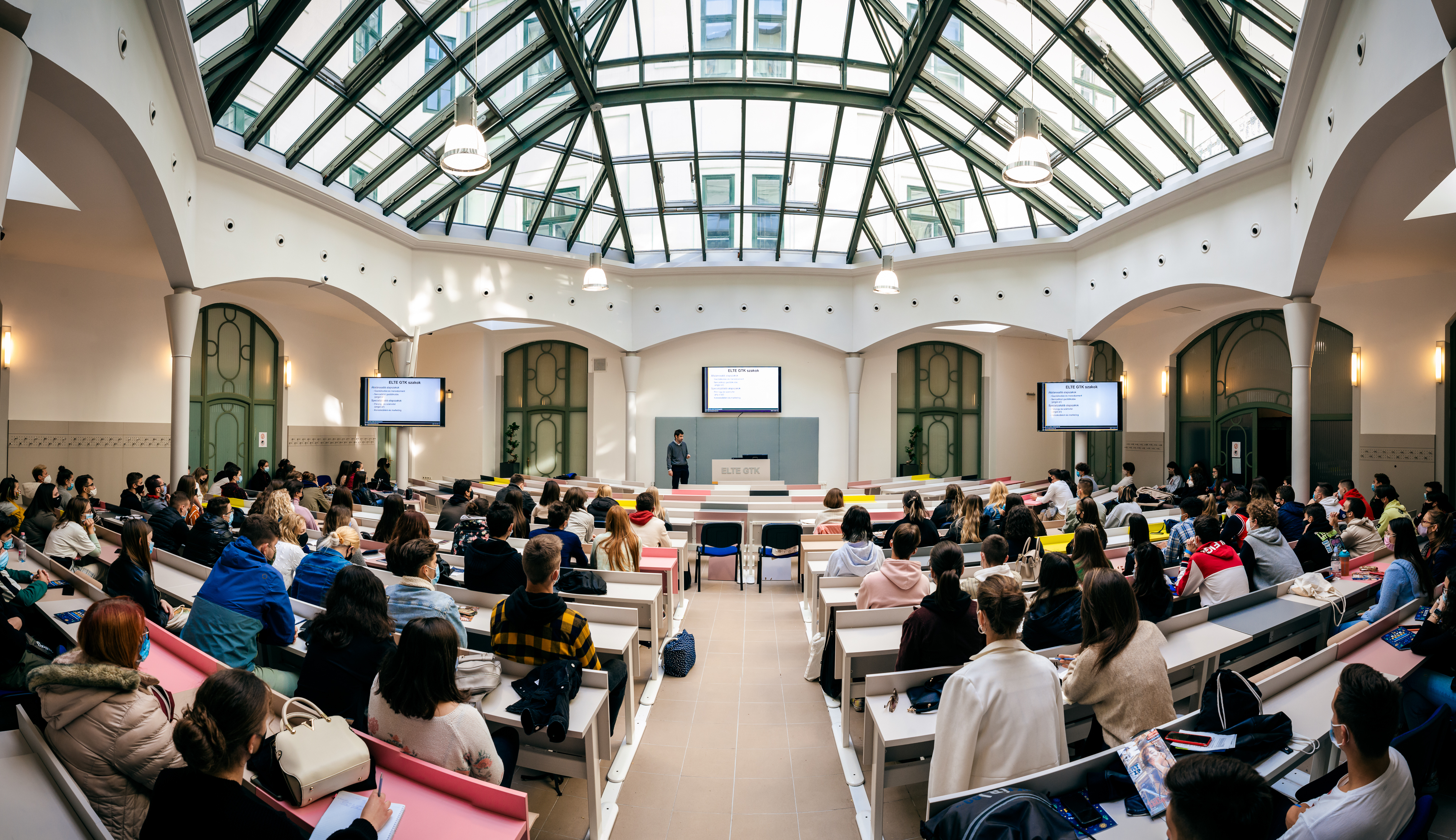
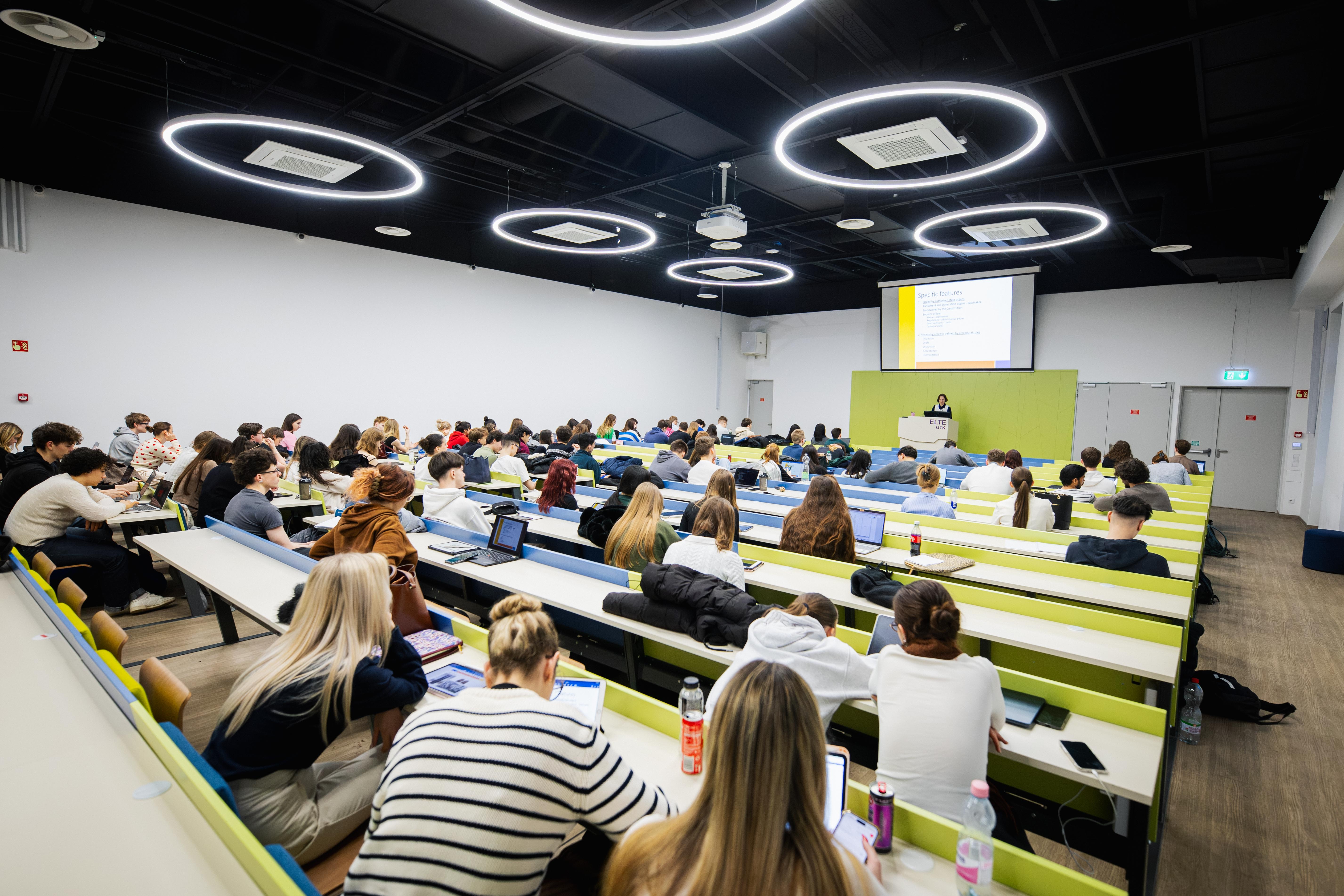
The faculty’s picturesque, state-of-the art, air-conditioned buildings are located on ELTE’s Astoria Campus in the city centre of Budapest. In total, we currently have around 8,500 students. Full-degree and exchange international students are a significant part of our student community making the learning experience particularly inspirational and effective. International students share classes with Hungarian students and also with Erasmus+ and guest students from partner universities, and are offered various onsite and international, as well as extracurricular opportunities to broaden their horizon. Our programmes include one or two semesters of compulsory internship, which gives students a significant competitive employment edge after graduation.
Primarily targeting international business environments, our trainings are attractive to high-ability and diligent students. We currently offer two English degree programmes at bachelor’s level, namely International Business Economics (8 semesters, 240 credits) and Finance and Accounting (7 semesters, 210 credits).
GTK is a proud member of the Business Graduates Association (BGA) and has already earned significant institutional recognitions and accreditations, with further international accreditation processes currently underway. Two of ELTE GTK’s programmes boast accreditations by the Association of Chartered Certified Accountants (ACCA). One is the Finance and Accounting BA programme, which was the first Hungarian bachelor’s programme offering undergraduate students a considerable number of exemptions from ACCA’s examinations. Students who successfully complete their ACCA studies, will have a considerable advantage in the job market worldwide including above-average salaries and easier promotion in the finance and accounting departments of multinational companies.
The main goals of the Finance and Accounting BA programme (FA) at Eötvös Loránd University are to familiarise students with economic processes both at a macro and a micro level and to acquaint them with the European monetary and business environment with a focus on finance, accounting, and controlling. This programme is recommended to applicants who are keen to become specialists in the above fields, coupled with a broad understanding and an up-to-date approach to business economics.
The FA programme enables students to become experts in economics and financial planning, to manage financial projects and help financial decision-making in companies. Successful graduates of the programme will be qualified to work, for instance,
in finance: predict economic viability in future scenarios as a stockbroker. Do reporting, forecasting financial situations, financial planning, expected costs, incomes, taxes as a financial analyst.
in accounting as a chartered accountant / management accountant: understand and present past financial data.
The ideal applicant loves to work with numbers, has strong analytical and problem-solving skills, a high degree of precision, and scrupulous attention to detail.
Watch this short video where students tell you why they like studying at ELTE GTK.
LEARN MORE ABOUT THE FACULTY OF ECONOMICS
View the video in which our international graduates introduce the two programmes offered by the Faculty and share their experience of studying at ELTE GTK.
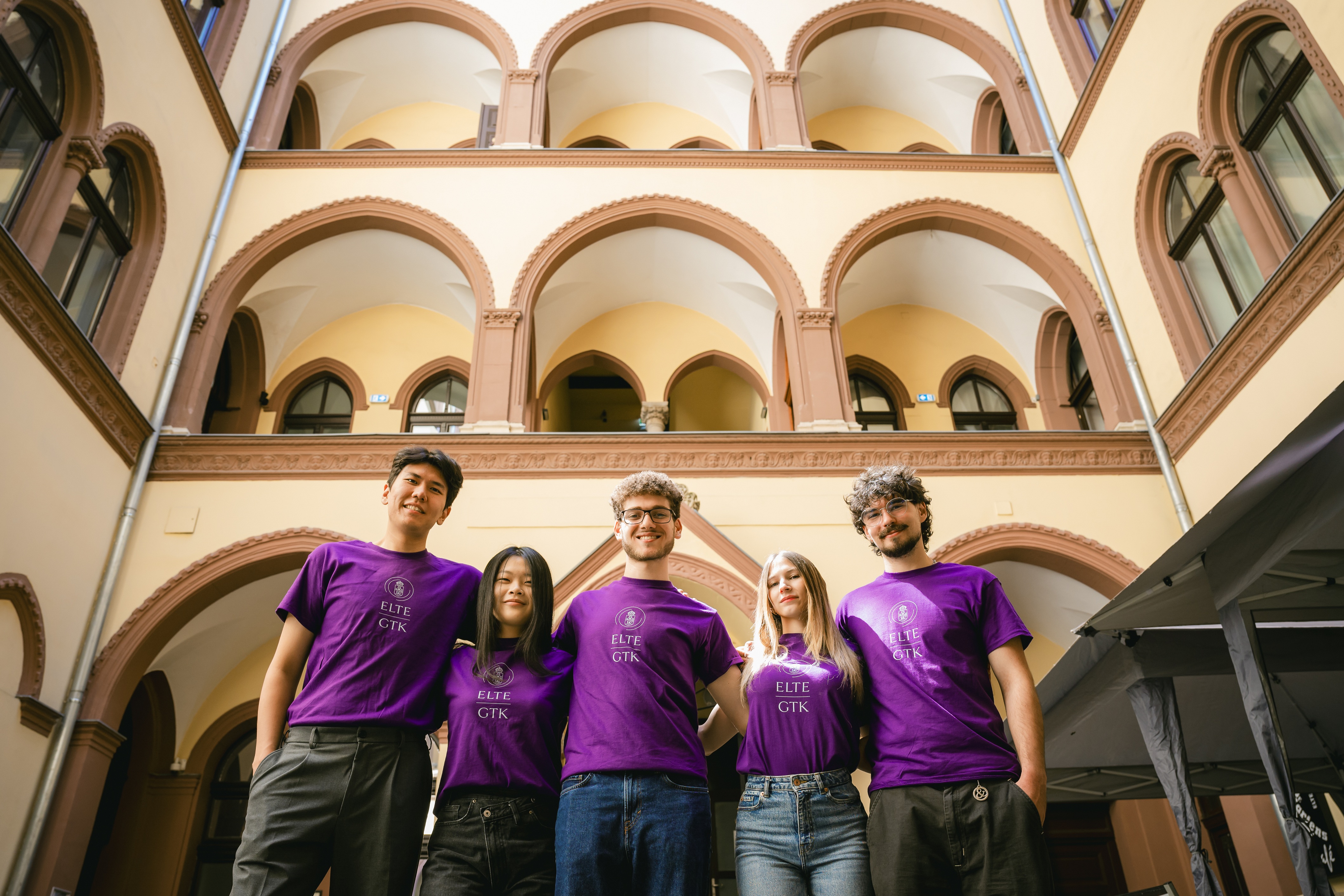
Find out why our students like studying at ELTE GTK by watching this short introductory video.
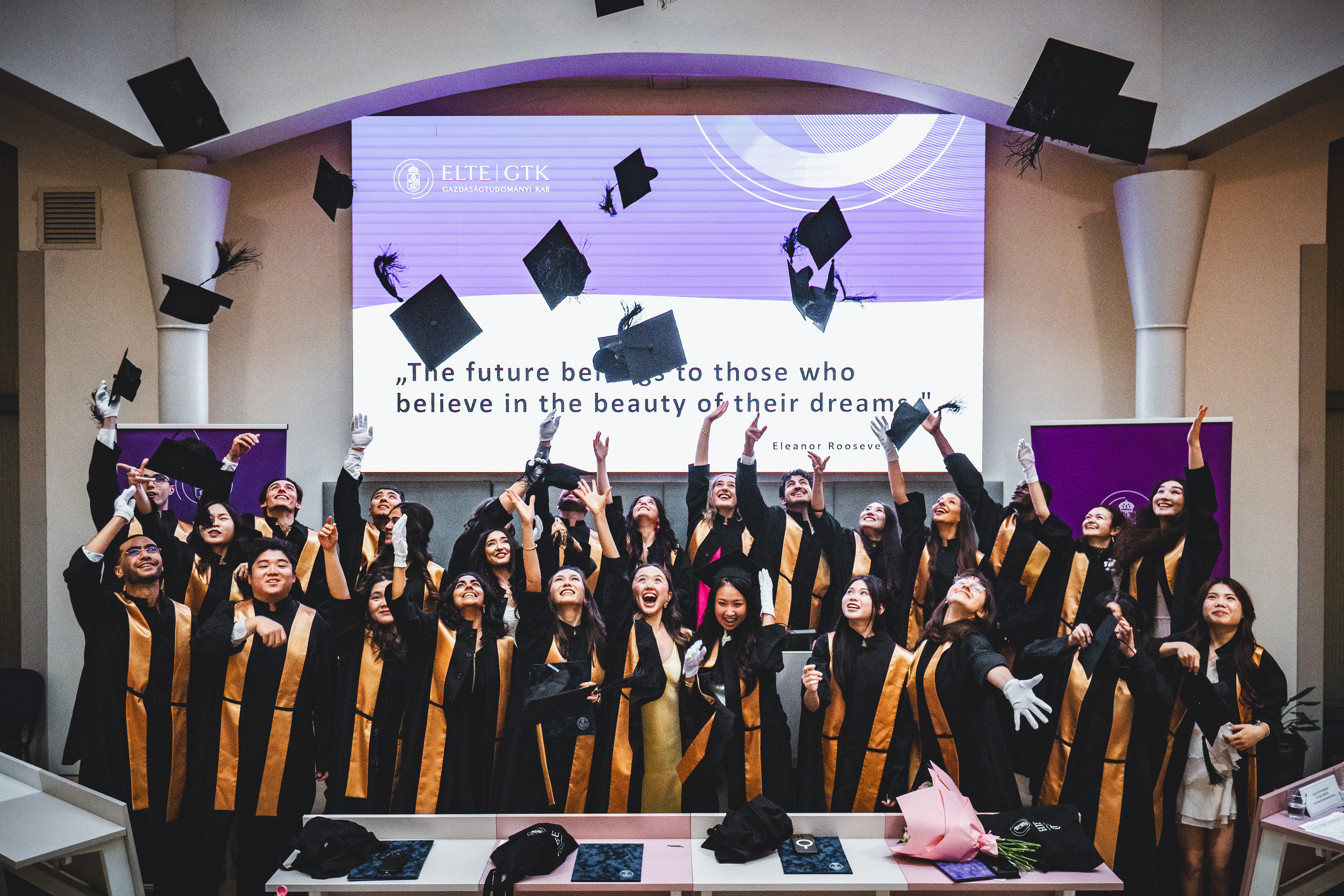
See how we celebrate our international graduates by watching two graduation ceremony reports: July 2024, and June 2026. For more joyous moments, visit our website.
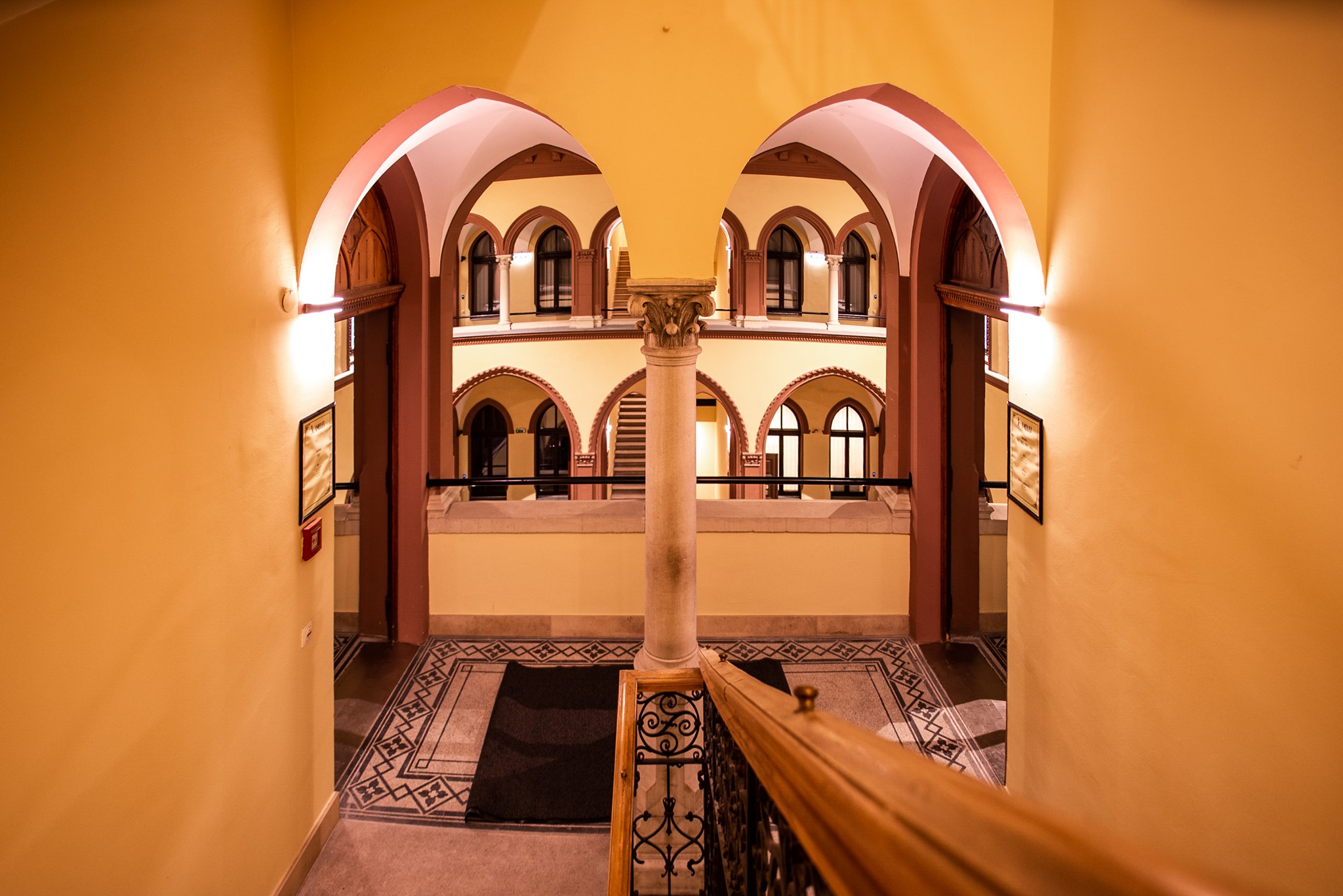
Join our international students on a campus tour of our main buildings: Building Q and Building P. These historic buildings, located in the city centre, offer an exclusive air-conditioned environment that is ideal for studying.
Equal opportunities and fair assessment are ensured by using 21st-century technology, e.g. by taking computer-based assessments at the GTK Exam Centre, and through the availability of class recordings to prepare for assessments at the Video Library.
Read our Programme and Course Guide to discover the most attractive attributes of our programmes and to see the details of the individual courses. Learn more about the various international and local opportunities open to our students and the support they receive at ELTE GTK.
Finally, you will find more interesting stories in the News section of our website.
The Finance and Accounting BA programme gives students a solid background in finance, accounting, and controlling combined with a general training in business economics. In addition, the programme’s international approach and the thorough understanding of such areas as IT, management, law, and communication, all of which are essential to those seeking employment in the 21st century business world, ensure that GTK’s students stand out from the crowd and find exclusive jobs upon graduation.
The main strengths of the Finance and Accounting programme at Eötvös Loránd University, Faculty of Economics are:
- consistent development of a multicultural approach and awareness
- continuous improvement of analytical and problem-solving skills
- considerable emphasis on business communication, argumentation, and negotiation skills
- strong focus on business law issues in order to avoid legal pitfalls
- increased attention to the social sciences and methodology to broaden students’ mindset
- successful application of theory to practice: one semester of compulsory internship, a list of business simulations and case studies offered by leading multinational corporations, and a prolonged project work process with an emphasis on solving real-life problems in the field of finance and accounting under the guidance of experienced supervisors.
Structure
Career
The general training in business economics and the solid background in finance, accounting, and controlling allow graduates to become experts in economics and financial planning, to manage financial projects, and to assist financial decision-making in prestigious multinational corporations.
- Chartered accountant
- Chartered management accountant
- External auditor
- Forensic accountant
- Stockbroker
- Financial analyst
Admissions
| EU/EEA students | Non-EU/EEA students | |
|---|---|---|
| Tuition fee/semester | 2700 EUR | 3600 EUR |
| Application fee |
155 EUR Those applying for both programmes only need to pay one application fee per person.
|
155 EUR Those applying for both programmes only need to pay one application fee per person.
|
| Entrance exam fee | ||
| Other cost |
Entry requirements
For the Finance and Accounting BA programme the application of those prospective students is welcome who have completed their secondary school studies and can provide proof of this by presenting a secondary or high school diploma (or equivalent), which allows direct access to tertiary/higher education, i.e., with this document the applicant should be eligible to study at university level.
Accepted certificates/diplomas:
General Certificate of Education Advanced level (GCE A-level) or International Baccalaurate (IB) exams, or equivalent, in minimum two subjects. These exams are most often taken at the age of 18. Due to the character of the programmes, exams in the following subjects are highly desirable: Mathematics, Further Mathematics, Economics, Business studies, Accounting, Computer science, History. In case of equivalent exams, for example, GED, the minimum required scores are 175+ to be considered as a potential applicant.
Not accepted certificates/diplomas:
General Certificate of Education Ordinary level (GCE O-level), GCSE, IGCSE, GCE AS, BTEC exams, which are regularly taken between the ages 14-16 and which do not immediately qualify students for university studies. Students who have taken these exams must complete an advanced, pre-university programme (GCE A-level) to qualify for university admission.
Provisional/predicted results are accepted temporarily, but final results must be submitted by 1 August the latest and presented during enrolment. No ”Letter of Acceptance” is issued without the final high school diploma results.
The submitted applications (including the application documents) are examined by the Admission Committee, by default, within three weeks of the application deadline. Eligible applicants are invited to the entrance exams and informed about the procedure in writing. Following the exams, applicants are notified of the outcome of the selection process via the online application system. Admission certificates (Letters of Acceptance) are issued and sent to those applicants, who have submitted all their documents, through the online application system by the end of July the latest. Those who have submitted all the required documents can expect to hear from ELTE GTK earlier. Please do not send enquiries before hearing from us.
Underage applicants: It is only in exceptional cases (e.g. if both the prospective student and a close relative/legal guardian already reside in Hungary and have a Hungarian residence permit) that we admit students who have not passed their 18th birthday by the start of the programme (1 September). A copy of both sides of the residence permit(s) together with a declaration and an authorisation document signed in blue ink by the applicant’s parents and the authorised person (download the template from the faculty website, complete them in both English and Hungarian) must be submitted together with the application package. No underage applicants will be considered in the absence of the above documents and only those are eligible who pass their 18th birthday by the end of the application year (1 December).
Applicants applying through an agency: Submit not only the agency’s but also your own email address to allow smooth and timely communication during the admissions process.
Language requirements
Minimum level of language proficiency (oral) (A1-C2): B2
Minimum level of language proficiency (written) (A1-C2): B2
Further comments:
Applicants must take one of the following standardised language tests and have a valid certificate with the minimum score shown below. (Please scroll down for exceptions.)
IELTS minimum overall band: 6.0
TOEFL (iBT) Score: minimum 80 points
TOEFL (PBT) Score: minimum 500 points
TOEFL (CBT) Score: minimum 173 points
Cambridge English: Cambridge First Certificate (FCE): 170
The following tests and certificates are not encouraged but are accepted (with the minimum score shown below):
Duolingo: 110
TOEIC Listening and Reading: 785
TOEIC Speaking and Listening: 310, and
Euroexam Online: overall 75%
If an applicant has a language certificate with a result lower than specified above (e.g. IELTS 5.0 or 5.5), do not upload the certificate. Instead, submit a signed declaration signed in blue ink that you do not have the expected level of English proficiency yet but undertake to pass the required test and upload the certificate by 1 August the latest.
The following applicants are exempted from taking one of the above standardised English tests:
those whose native language (mother tongue) is English
those who have studied at an English-medium secondary/high school for a minimum of two years – Applicants must upload an official (stamped and signed) certificate issued by their school stating that their secondary/high school education was in English (Medium of Instruction Certificate)
those who have completed courses worth minimum 60 credits in English at university level – Applicants must upload their certified Transcript of Records showing that courses were taught in English and were successfully fulfilled by the applicant.
Document | Comment |
Transcript of records of the final two years in secondary school | original and certified English translation |
Secondary school certificate/diploma (or equivalent) | original and certified English translation If the diploma is not available at the time of the application, an official document issued by the school stating the expected date of issue. is to be uploaded |
CV | required Word or pdf format, under relevant task |
Motivation letter | required type text (between 1000 and 1500 characters) |
Recommendation letter OR reference | required 2 letters in pdf format, signed and stamped, preferably on institutional letterhead paper, with referee’ s email address under relevant task, |
Copy of the main pages of the passport | passport must be valid, preferably until after enrolment (early September). If a passport is not available, a signed declaration together with a personal photo ID issued by applicant’s home country is required. |
Passport photo |
|
Emergency contact | full name, phone number, and email address |
Copy of application fee transfer document/invoice | see below |
Language certificate | if applicable, see above (or declaration) In case of English-medium education at university level, a certified Transcript of Records showing fulfilled completed English-language courses worth minimum 60 credits |
The submission of the following documents is not required but encouraged, and they are taken into consideration in the admission process: Mathematics exams (SAT Mathematics Subject Test Level II.: min. 680 points or ACT Test: min. 22 points in the Mathematics part), IB exam results.
Please upload only the requested documents. Do not upload any other certificates (e.g. competition results, voluntary work) as they will not be considered. The above is a summary of the requirements. For a detailed list of the required documents, visit ELTE’s online application system. Under all circumstances, the information there is considered valid and authoritative.
Application starts in the online application system and includes the payment of the non-refundable application fee and the submission of the bank transfer document by the application deadline. See the payment details below). Prospective students must register in the system, fill in the online application form, upload the required documents and follow the instructions during the application process.
Payment of the application fee (in EUR) is per applicant (i.e. if you apply for both programmes, you only need to pay one application fee) and is to be made via EPAY by the application deadline. Detailed instructions are provided on the website. The non-refundable fee covers the costs related to the administration of applications and does not guarantee the invitation of the applicant to the admissions exams or his/her admission to the programme. Bank charges must be covered by the applicant.
For further information and detailed instructions on how to pay the application fee via EPAY, visit the Application Fee document.
Entrance examination and selection process:
The application documents are examined by the Admission Committee within three weeks of the application deadline. Next, eligible applicants are informed on the exact details (timing and content) of the entrance examination. The expected level of the exams does not exceed knowledge pupils can gain at secondary (high) school level. Sample exam questions are not available.
Following the admissions exams, applicants are ranked by the Admissions Committee and notified of the outcome of the selection process via the online application system. Admission certificates (Letters of Acceptance) are issued and sent via the same platform by the end of July the latest to those applicants who have submitted all their documents, also through the online application system.
There is no February intake.
Type of entrance examination: a combination of oral, written, and video tasks
Place of entrance examination: various online platforms (e.g. Moodle, MS Teams)
Further details of the entrance exam:
Following the submission and initial examination of the required documents, a two-part entrance examination will take place online. The examination may consist of a combination of different tasks, e.g. an online written task, a video submission, an individual or group oral interview / discussions. (Not all may be used every year, and the exam details are given in the invitation to the admissions exams exams sent to eligible candidates.) The expected level does not exceed knowledge pupils can gain at secondary (high) school level. However, sample exam questions are not available.
The online written task is designed to test the applicant’s level of English proficiency and his/her mathematical / logical skills in the form of tests and essay writing tasks.
The video task is like an ‘application pitch’ providing some insight into the applicant’s life, and allowing the faculty to assess the candidate’s academic potential, language skills and overall suitability for the programme.
The oral part takes the form of a short (approximately 15-minute-long) interview / discussion on an online platform.
Further details of the selection and evaluation method:
The ranking of the applicants is based on the overall evaluation of their previous academic excellence (as attested by in the submitted documents) and the results of the combined entrance examination. Admission certificates (Letters of Acceptance) are issued and sent to those applicants, who have submitted all their documents, through the online application system by the end of July the latest. Those who have submitted all the required documents in time can expect to hear from ELTE GTK earlier. Applicants are advised that the first-semester tuition fee must be transferred in full (and the transfer document uploaded to ELTE DreamApply) by the time announced by the International Office soon after the Letter of Acceptance is issued. The Proof of Payment document issued afterwards is needed for the visa/residence permit application (together with the Letter of Acceptance).
Contacts
ELTE GTK International Office
E-mail: degreeprogramme@gtk.elte.hu
Postal address: Rákóczi út 7, 1088, Budapest, Hungary
Program coordinator
Dr László SZÍVÓS
Associate professor
Director of International Affairs and Programmes
Prof. Mihály ORMOS
Head of Department of Finance and Accounting








See the semester-based list below. For more information on the individual courses, visit our website and browse our Programme and Course Guide.
Semester 1
Management I. (6)
Marketing I. (6)
Accounting I. (6)
Mathematics I. (6)
Community and Individual (3)
Economics I. (3)
Start wAItless - Introduction to the use of Artificial Intelligence in Higher Education (0)
Semester 2
Corporate Finance I. (6)
Accounting II. (3)
Management II. (3)
Mathematics II. (6)
Business Law I. (6)
Economics II. (6)
Semester 3
Corporate Finance II (3)
Analysis and Controlling (6)
International Finance and Economics (6)
Business Problem Solving with Excel (3)
Argumentation (3)
Business Law II (6)
Business Statistics I (3)
Semester 4
Management Accounting (6)
National and International Taxation (3)
Economic Policy (3)
Persuasion (3)
Business Statistics II (6)
Industrial Organisation (3)
Preparatory Course for Project Work (3)
Compulsory Elective Course Unit in Informatics (3)
Semester 5
Investment and Financing (6)
Project Work I (9)
Compulsory Elective Course Unit in Law (3)
Compulsory Elective Course Unit in the Social Sciences (3)
Free Elective Course I (3)
Free Elective Course II (3)
Free Elective Course III (3)
Comprehensive Exam A (0)
Comprehensive Exam B (0)
Semester 6
Negotiation (3)
International Financial Management (6)
Social Responsibility, Sustainability (3)
Law and Economics of the European Union (3)
Project Work II (9)
Compulsory Elective Course Unit in Economy and Society (3)
Free Elective Course IV (3)
Semester 7
Thesis Writing (10)
Internship (20)
Compulsory Elective Course Unit Offer in Law (3)
Law, State, Democracy
International Business Law
European Union Law (EU law)
Fundamentals of Labour Law
Information Society Law
Business and Human Rights
Press Knowledge and Press Law
Capital Markets Regulation and Compliance
Compulsory Elective Course Unit Offer in the Social Sciences (3)
Conceptual Tools of Sociology
Introduction to Cultural Anthropology
Sociology and the Study of Modern Societies
Schools and Methods in Cultural Anthropology
Fundamentals of Political Science
Diversity, Equal Opportunities, and Inclusion: Social Perspectives
Compulsory Elective Course Unit Offer in Economy and Society (3)
Problems in Contemporary Philosophy
Transdisciplinarity and Expertise
Business Ethics
Health Economics
Compulsory Elective Course Unit Offerin Informatics (3)
Data Analysis in the Social Sciences
Finance and Accounting Informatics
Business Analysis
Advanced Excel
The art of data analysis with Python
For more detailed information on the courses, visit our website or read our Programme and Course Guide.